The Messiah Who Couldn't Fail
Rome executed Jesus. His followers came to believe that death could no longer touch him. Did that conviction allow a defeated movement to turn its apparent ending into a beginning?
Rome executed Jesus. His followers came to believe that death could no longer touch him. Did that conviction allow a defeated movement to turn its apparent ending into a beginning?
There is an obvious difficulty with following someone you believe has been chosen to transform the world.
What happens when he dies without transforming it?
Not peacefully, after a long life of apparently fulfilled promises, but publicly and violently, at the hands of the authority under which you are still living.
For Jesus’ followers, the question was not hypothetical. Their teacher had been executed under Pontius Pilate. Whatever they had expected from him, Roman power had not disappeared. Instead, it had demonstrated its power over his body. The execution itself is among the strongest historical foundations beneath the later Christian story. Open Yale Courses
Yet Christianity developed around a remarkable reversal.
Jesus’ death did not show that he had failed. God had raised him, and his work remained to be completed. In Romans 6:9, Paul goes further: the risen Jesus would never die again. Death no longer possessed authority over him. Bible Gateway
That is the possibility I want to investigate here.
A Messiah who could no longer die was a Messiah whose mission no longer had to end with his execution.
This does not establish why people first believed in the resurrection. But it may help explain what that belief made possible.
The familiar crucifixion story can make Jesus’ death seem inevitable: a necessary stage in a divine plan, already understood before it happened.
Historical investigation has to approach it differently.
Mark’s account places a royal accusation above the cross: “The King of the Jews.” The Roman historian Tacitus also later identifies Pontius Pilate, acting during Tiberius’ reign, as the authority responsible for Jesus’ execution. Tacitus is not providing a surviving trial transcript, but his hostile account supplies evidence outside Christian scripture for the basic event. USCCB
Dale Martin, in his Yale lecture on the historical Jesus, regards the kingship charge as an important clue to why Jesus was killed. A person perceived as claiming royal authority could be dangerous to Roman government whether or not he commanded an army. Pilate did not need to resolve the theological meaning of Jesus’ teaching before treating him as a potential political problem. Open Yale Courses
That does not mean we can reconstruct every exchange during his arrest and trial.
The Gospel narratives describe involvement by Jerusalem’s priestly leadership, but these accounts do not justify transferring responsibility for a Roman execution to Jewish people collectively. Jesus and his first followers were themselves Jewish; disputes involving particular authorities are not accusations against an entire population. USCCB
For our purposes, the essential distinction is between what the execution did and what Christians eventually believed it meant.
Rome killed a man.
His followers came to believe that God had overturned the verdict.
It would be too crude to suggest that ancient Jewish people assumed anyone killed by an oppressor must have been abandoned by God.
Their own literature offered other possibilities.
In 2 Maccabees 7, persecuted Jewish martyrs face death while expressing confidence that God will restore their lives. Daniel 12 also anticipates the awakening of the dead. These texts demonstrate that death, divine justice and future vindication could already be understood together. Such expectations were not something Christianity created from nothing. USCCB
But remembering a righteous martyr and proclaiming an executed man as the agent of God’s impending victory are not quite the same thing.
Paul himself acknowledges the difficulty. In 1 Corinthians 1, he presents the proclamation of a crucified Messiah as something that could appear religiously offensive or intellectually absurd to those hearing it. The humiliation was not invisible to early Christians. It was part of the problem their message addressed. USCCB
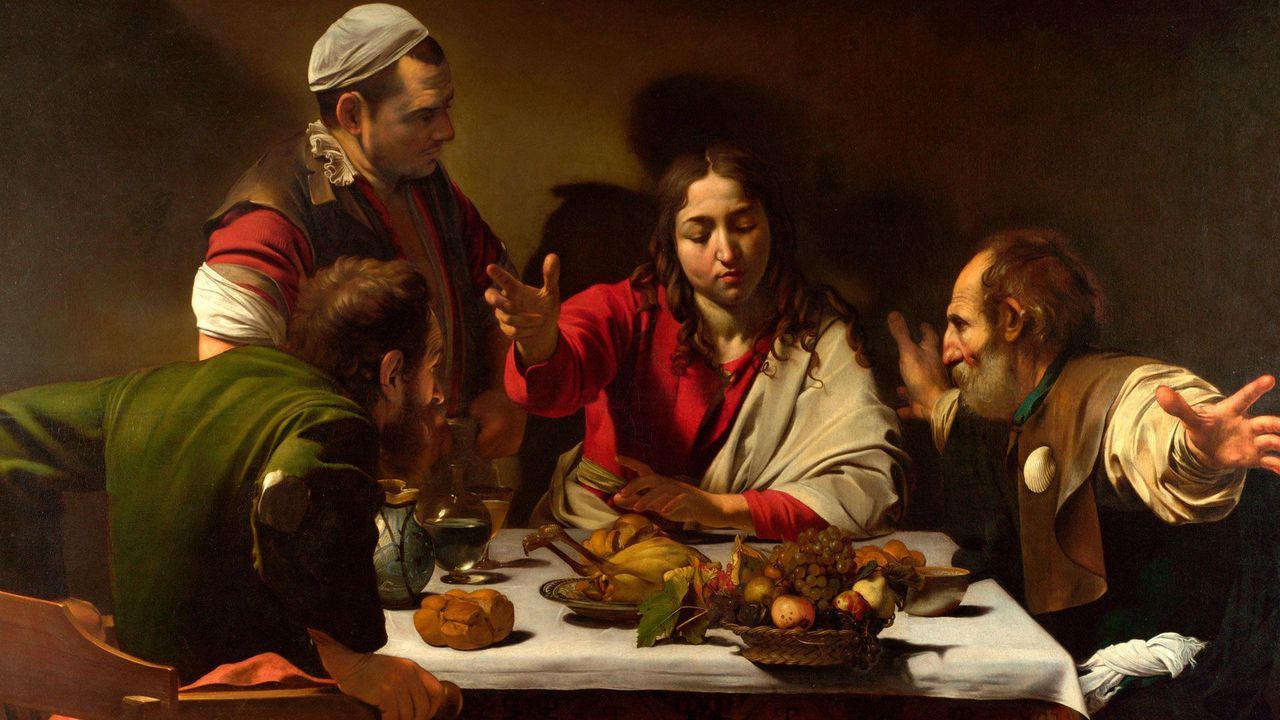
Luke’s Emmaus story gives that disappointment a human expression. Two followers describe Jesus as someone they had hoped would redeem Israel. The sentence places their expectation in the past: this was what they had hoped, before the execution. It is Luke’s later portrayal of their disappointment, not an independently preserved conversation, but it shows that the difficulty remained intelligible to the storyteller. USCCB
We should not assume every follower had expected the same outcome. Redemption might carry different political, religious and personal meanings.
Nevertheless, the question remains.
How do you continue believing someone will fulfil an extraordinary mission when the most ordinary fact about him is that he is dead?
To investigate the answer, we need to begin earlier than the familiar resurrection scenes.
Paul’s First Letter to the Corinthians, generally dated to the mid-50s CE, is earlier than the surviving written Gospels. Mark, usually regarded as the earliest Gospel, is commonly dated around 70 CE. That makes Paul particularly important: he was writing while the movement was still within its first generation. USCCB
In 1 Corinthians 15, Paul reminds his readers of material he says he had received and passed on: Jesus died, was buried, was raised, and appeared to followers. His account connects these events with the interpretation of Jewish scripture. USCCB
Scholars commonly identify an inherited formula within this passage, although its precise boundaries and earliest wording remain debated. The significance is that Paul presents the central proclamation as something already transmitted, rather than as an idea he is introducing for the first time. Larry Hurtado discusses this earlier tradition in his assessment of research on the passage. Larry Hurtado's Blog
That does not give us a document written on the morning after the crucifixion. Nor does it allow us to assign every sentence to a confidently identified week or month.
It does establish that resurrection belief was not merely a much later explanation attached to an otherwise unrelated movement.
Paul’s other letters also connect him to people near its beginnings. In Galatians 1, he says he had previously persecuted the church, subsequently experienced a revelation concerning Jesus, and later spent fifteen days with Cephas—Peter—while also meeting James, whom he identifies as Jesus’ brother. USCCB
Those contacts matter. Paul was not writing centuries later with no access to the movement’s early participants.
But access is not the same as a preserved interview. We do not possess a record of everything Peter and Paul discussed, or evidence that Paul systematically cross-examined him about every reported appearance.
Historian Bart Ehrman argues that Paul’s own account makes him an implausible sole inventor of resurrection belief: he describes opposing an existing movement before joining it. Paul became an influential interpreter of a conviction that preceded his involvement. The Bart Ehrman Blog
The evidence is early and connected.
It is not complete.
One detail in Paul’s account deserves particular attention.
He says Jesus appeared to more than five hundred people at once, adding that most were still alive when he wrote. But he supplies no names for that gathering, no location and no detailed description of what the participants experienced. USCCB
This is sometimes presented as though we possess hundreds of independently recorded eyewitness statements.
We do not.
We possess one surviving written claim about a large group of witnesses, not five hundred surviving testimonies.
That distinction does not prove Paul invented the gathering. His statement that many participants remained alive could suggest confidence that the report was open to enquiry. But it is not a record of such enquiries having been conducted.
The number cannot do more evidential work than the source permits.
Paul’s own claimed revelation is a different kind of evidence: a participant reporting his experience. Reports about other people’s encounters require us to ask additional questions about transmission, interpretation and corroboration.
Neither should be dismissed merely because it is religious. Neither should be treated as self-verifying.
The claim was more consequential than saying Jesus’ memory lived on.
It was also different from saying his soul had gone somewhere pleasant after death.
Paul presents Jesus’ resurrection as the beginning of a larger transformation. His agricultural image is of an initial yield announcing the harvest still to come: what happened to Jesus anticipates what will happen to others. As Dale Martin explains, Paul connects Jesus’ resurrection directly to the future resurrection of believers. Open Yale Courses
That puts the claim within a Jewish framework of God ultimately overcoming death, while making an extraordinary assertion about Jesus’ place within it.
The anticipated future had, in one person, already begun.
Paul’s discussion of a “spiritual body” can confuse modern readers. It should not automatically be translated into the idea of a disembodied ghost. His language concerns transformed embodiment, although scholars debate precisely how he conceived its nature and continuity with the mortal body. Martin particularly warns against importing a straightforward modern opposition between material bodies and immaterial spirit into Paul’s ancient categories. Open Yale Courses
The distinction matters because there are two oversimplifications to avoid.
One assumes the earliest Christians meant nothing more than an inner feeling that Jesus remained spiritually present.
The other assumes they all possessed an identical, fully worked-out account of how a resurrected body functioned.
The sources contain more argument and explanation than either picture allows. Even within the Corinthian community, Paul was addressing disagreement about resurrection, not merely repeating something everyone understood in the same way. USCCB
For this investigation, however, the decisive point is simpler.
Jesus was not believed to have returned temporarily to ordinary life, awaiting another eventual death.
He had passed beyond death’s reach.
Here the central hypothesis becomes especially compelling.
An ordinary living leader can be arrested again. He can disappoint his followers again. He can grow old, become incapacitated or die before achieving his stated purpose.
But Paul’s risen Jesus could not die again. That conviction is explicit in Romans 6:9. Bible Gateway
Consider the consequence for someone who accepted it.
Jesus’ execution no longer established the limit of his authority. It became something his authority had overcome.
The absence of a completed transformation could also be understood differently. Jesus had not exhausted his opportunity to fulfil the mission. His followers still expected his return. USCCB
My suggestion is that this changed the structure of disappointment.
The conclusion did not have to be that the wrong person had been followed. It could be that his followers had misunderstood the sequence of events.
What looked like the end belonged to an unfinished story.
There is an important qualification: a belief that protects a leader’s status does not automatically preserve a community. People still have to find it credible, pass it on and organise their lives around it.
But resurrection and return offered a way of maintaining allegiance that did not depend on Jesus remaining alive in the ordinary sense.
The execution could end his earthly ministry without being allowed to settle the question of his ultimate success.
That is a historically useful explanation of what the belief accomplished.
It is not yet an explanation of how the belief began.
This is where sceptical interpretations can become too confident.
Once we notice that resurrection belief solved a devastating problem, it is tempting to imagine followers deliberately devising it to save the movement.
But usefulness does not establish intention.
Someone can sincerely believe an interpretation that also helps them endure a catastrophe. Indeed, sincerity may be essential to its power.
Scholars disagree sharply about how to explain the reported encounters. Ehrman has suggested that a small number of people may have had experiences they sincerely interpreted as appearances of Jesus, while others became convinced through their testimony. He presents this as a reconstruction, not a recovered account of exactly what happened. The Bart Ehrman Blog
N. T. Wright argues in the other direction. He maintains that an empty tomb together with encounters understood as appearances of Jesus is best explained by an actual bodily resurrection. For Wright, ordinary bereavement experiences or the persistence of a teacher’s memory do not adequately explain the particular claims early Christians made. NTWrightPage
These positions disagree both about the likely events and about how much confidence to place in the surviving reports.
Wright’s explanation depends partly on his assessment of the historical evidence for the tomb and appearances. Ehrman’s alternative cannot identify the precise psychological process experienced by any particular disciple.
Simply declaring that everyone hallucinated would therefore be an overstatement. So would claiming that the available sources leave no room for any explanation other than a miracle.
For the argument here, we can separate two questions.
What caused people to believe Jesus had risen?
And what became possible once they believed it?
The first remains contested. The second can be investigated through the writings and communities that conviction produced.
The Gospel narratives add another layer of evidence—and another set of difficulties.
Paul’s account mentions burial and resurrection without narrating the discovery of an empty tomb by women. That absence does not prove he knew nothing of such a story, but neither does his letter supply the later narrative’s details. USCCB
Mark’s earliest recoverable ending is particularly striking. The women encounter a young man announcing that Jesus has risen, but the account stops with their fear and flight. It does not narrate an appearance of the risen Jesus. The longer ending found in many Bibles belongs to the text’s later transmission. Crucially, this does not mean resurrection belief was added only with that ending: it is already proclaimed before the text breaks off. Bible Gateway
Then there are the episodes in which Jesus is present but unrecognised.
In John 20, Mary Magdalene initially mistakes him for the gardener. Recognition comes when he addresses her by name. Later in the same chapter, Jesus appears among followers behind locked doors, and Thomas is invited to examine his wounds. John is presenting continuity with the crucified man alongside something extraordinary about his presence. Bible Gateway
Luke’s Emmaus account likewise says the travellers are prevented from recognising Jesus. Their recognition comes during the breaking of bread, immediately before he vanishes. Yet Luke also depicts Jesus insisting on his bodily reality and eating fish before his followers. USCCB
These are not straightforward descriptions of an ordinary man resuming his former routine.
But the recognition difficulties are not evidence, by themselves, that Jesus had changed his face, disguised himself or been replaced by an impostor. Luke explicitly frames the failure to recognise him as something affecting the followers’ perception.
The scenes invite theological readings about revelation, understanding and recognition. Determining how they relate to particular historical experiences is harder.
What we should resist is flattening everything into a single seamless account and then treating that harmonised reconstruction as another ancient source.
The texts deserve to be read individually before we decide how they fit together.
The familiar forty-day period comes specifically from Acts 1.
Its author describes Jesus appearing to followers and teaching them about God’s kingdom during that interval, before narrating his ascension and the promise of his return. USCCB
That is a more specific chronology than Paul provides.
It is also not a statement that Jesus spent forty days continuously visible to the general public, living openly under observation. Acts describes appearances and instruction; it does not supply an independently corroborated daily record.
The distinction matters because it changes the apparent evidential claim.
A series of reported encounters is not the same thing as forty days of documented public activity.
Literarily, Acts also gives the absence of Jesus a place within the story. He departs, his followers receive a mission, and his return remains ahead. Their task is no longer to accompany him through Galilee, but to carry the message elsewhere. USCCB
The founder’s absence becomes part of the community’s calling rather than the cancellation of it.
That is another way the story continues.
An immortal Messiah solves one problem but introduces another.
How long are people supposed to wait?
The pressure is already visible in Paul’s First Letter to the Thessalonians. Members of the community have died, and Paul addresses concern about what will happen to them when Jesus returns. He assures his readers that the dead will participate, then speaks of believers still alive at the coming of the Lord. USCCB
His language makes the return sound like a live expectation, not merely an event safely assigned to an unimaginably distant future.
That does not give us a precise date Paul had promised. But it does reveal the practical questions created when ordinary mortality continued while an extraordinary transformation was expected.
A further response appears in 2 Peter 3. The writer addresses people questioning what has become of the promised coming. The answer appeals to the difference between divine and human timescales and interprets the apparent delay as patience. Bible Gateway
Here the objection itself becomes part of the surviving religious literature.
The promise has not simply vanished from view. Someone has noticed the problem and supplied an answer.
This strengthens the hypothesis, but also places a limit on it.
Resurrection belief did not eliminate disappointment permanently. It made Jesus’ death interpretable as something other than final defeat, while the passage of time generated new questions requiring new explanations.
A belief capable of surviving one apparent contradiction is not necessarily immune to every future difficulty.
Its endurance can depend on interpretation continuing.
It would be satisfying to conclude that Christianity succeeded because its Messiah could not die.
It would also be too simple.
A doctrine does not travel, arrange a meeting, support a struggling household or resolve a community dispute by itself.
Paul’s letters preserve some of the human work involved. Galatians 2 describes negotiations about a mission to non-Jewish people, a dispute over whether a Greek believer needed circumcision, and a confrontation about eating with Gentile members. Expansion was being argued over within the movement, not carried out according to an uncontested plan. USCCB
The greetings in Romans 16 reveal another side of that work: benefactors, co-workers and a congregation meeting in the house of Prisca and Aquila. These names can look incidental beside grand theological claims, but they show relationships through which a movement could function. Bible Gateway
It seems reasonable to infer that admitting Gentiles without requiring circumcision made participation more accessible to some potential converts. But that is not a complete numerical explanation for Christianity’s growth. The sources do not let us assign a percentage of its eventual success to each contributing factor.
Nor did everyone remain convinced.
Around 112 CE, the Roman governor Pliny the Younger reported questioning people who said they had once been Christians but had abandoned the movement—some years earlier. His account is an important corrective to any picture of an automatically self-sustaining faith from which nobody departed. PBS
Christianity survived despite defections, disagreements and uncertainty.
It did not survive because these things became impossible.
The strongest version of the argument is therefore narrower: resurrection belief helped make continued allegiance possible after the founder’s execution; people and institutions still had to make that allegiance endure.
Where does this leave the idea of the Messiah who could not fail?
Not as proof of a cleverly designed fraud.
Not as a complete explanation of Christianity’s eventual dominance.
But as an illuminating way to understand the movement’s survival.
The writings examined here preserve several connected convictions: Jesus had been raised; death no longer ruled him; he would return; and his followers had work to do in the meantime. Together, these beliefs meant the crucifixion did not have to invalidate the mission. Bible Gateway
To someone outside the movement, the execution might look conclusive.
To someone within it, the same event could become the beginning of God’s victory.
That difference does not tell us which interpretation of the supernatural claim is true. It does help explain why the historical outcome was not determined by the fact of Jesus’ death alone.
It also brings us to the next transformation.
A community travelling with a living teacher can, at least in principle, ask him what he means. A community proclaiming a risen and absent Lord must establish how his wishes are known.
Paul’s letters already show competing claims to authority, disagreements over conduct and arguments about what the message requires. These were not simply problems imposed on Christianity centuries later. They belonged to its early development. USCCB
My suggestion is that resurrection belief did two things at once.
It preserved Jesus’ authority beyond his death.
And it left the exercise of that authority in the hands of people who claimed to understand him.
That does not mean their claims were necessarily dishonest. But it made questions of testimony, interpretation and legitimacy unavoidable.
Whose account should be trusted? Which teaching came from Jesus? What could a revelation establish? Who was entitled to correct whom?
The movement had survived the loss of its founder.
Now it faced the problem of preserving—and defining—his voice.
Once Jesus was no longer there to settle an argument, who had the authority to say what he meant?
That is where the making of the New Testament begins.
The earliest Christian evidence. The principal Pauline passages examined are 1 Corinthians 1 and 15; Galatians 1–2; Romans 6:8–11 and 16; and 1 Thessalonians 4:13–18. Paul’s letters provide evidence for what he and his communities proclaimed, not independent verification of every event they describe. The dating of 1 Corinthians follows the introductory discussion published by the USCCB. USCCB
The narrative accounts. Mark 15–16, Luke 24, John 20 and Acts 1 are treated as distinct authored accounts, rather than combined into an assumed eyewitness chronology. The modern editions consulted identify significant textual issues, including Mark’s longer ending. Bible Gateway
Jewish precedents. Daniel 12:2 and 2 Maccabees 7 provide examples of resurrection and vindication expectations. Their use here does not imply that all ancient Jews held identical beliefs. USCCB
Evidence outside Christian scripture. Tacitus, Annals 15.44, reports Jesus’ execution under Pilate. Pliny the Younger’s correspondence with Trajan, particularly Letters 10.96, supplies evidence about early second-century Christians and former Christians. Neither is an eyewitness account of the resurrection. Penelope
Historical interpretation. Dale B. Martin’s Open Yale Courses lectures, “The Historical Jesus” and “Paul as Pastor,” inform the discussion of execution and Pauline resurrection language. Larry Hurtado’s “Paul on Jesus’ Resurrection: A New Study” (11 September 2014) discusses the tradition preserved in 1 Corinthians 15. Open Yale Courses
Competing explanations. N. T. Wright’s lecture “Can a Scientist Believe in the Resurrection?” and Bart Ehrman’s “Did Paul Invent Jesus’ Resurrection?” (29 January 2022), including Ehrman’s own responses below the article, were consulted for their differing interpretations. Their positions are presented as arguments, not interchangeable statements of scholarly consensus. NTWrightPage